
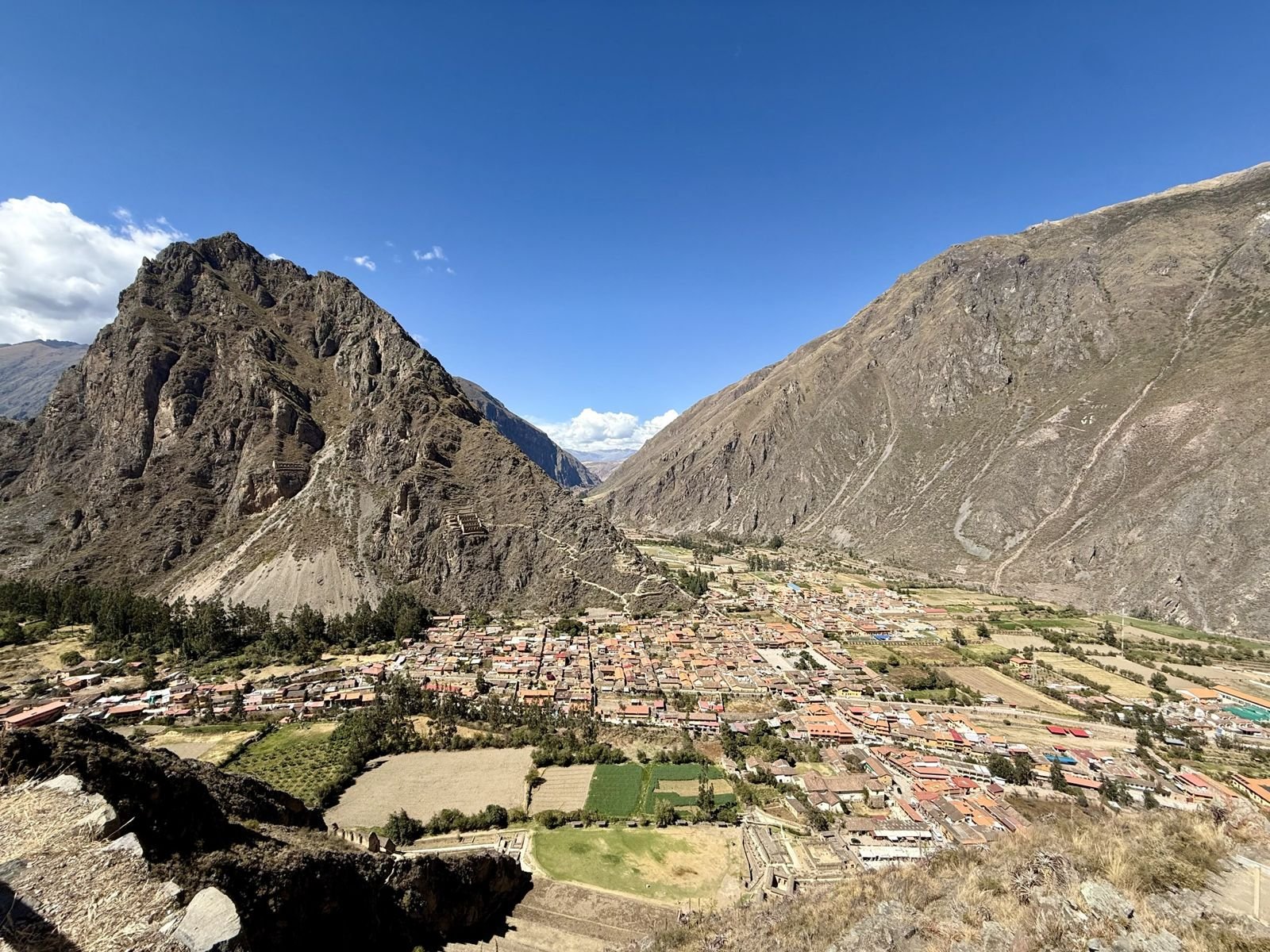
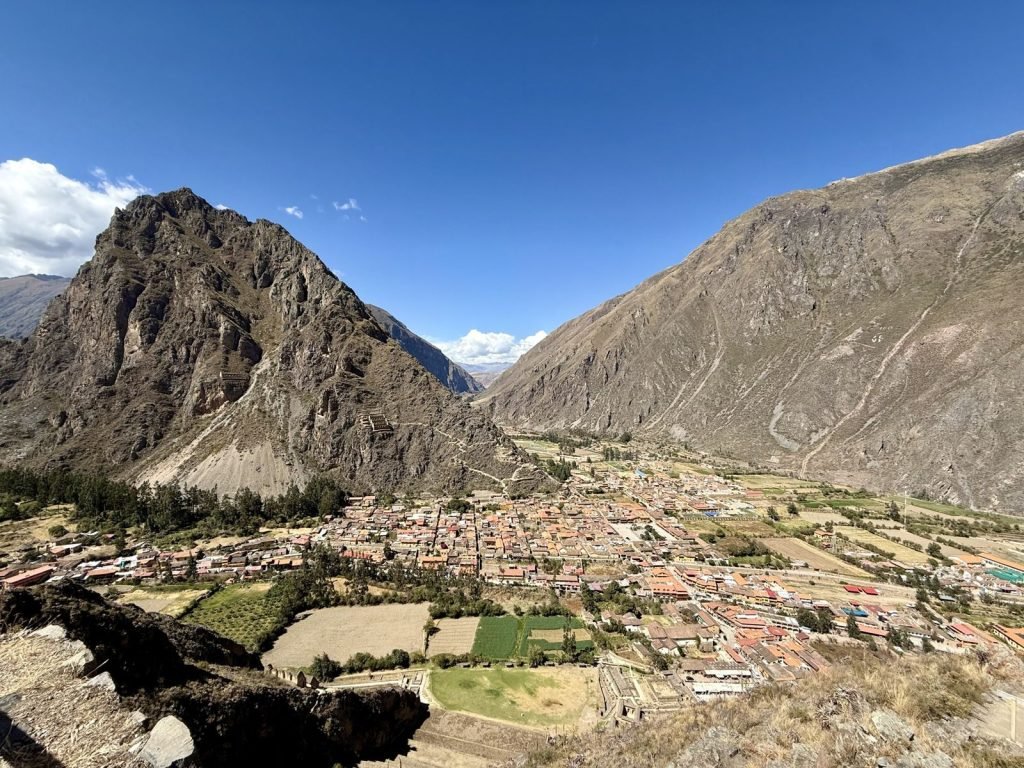
Most travellers only see Ollantaytambo from the window of the train to Machu Picchu. That is a pity: it is one of the few towns in Peru where people still live in Inca houses and walk Inca streets, and it sits at 2,792 m, lower than Cusco, so it is a good place to get used to the altitude. Here is how we suggest spending one day in town and, if you can stay longer, a second day exploring the Sacred Valley.
Your plan at a glance
| Morning | Afternoon | |
|---|---|---|
| Day 1 | Ollantaytambo archaeological park at opening time | Inca town walk, lunch, Pinkuylluna storehouses, textiles |
| Day 2 | Sacred Valley tour (Maras, Moray, Chinchero or Pisaq) — or a hike to Pumamarca | Rest, early dinner and an early night if you take the train to Machu Picchu |
Before you go: the Boleto Turístico
The Ollantaytambo archaeological park does not sell its own ticket: you enter with the Boleto Turístico del Cusco. The partial ticket for the Sacred Valley (S/ 70, valid 2 days) covers Ollantaytambo, Pisaq, Chinchero and Moray — exactly what this plan needs. The full ticket (S/ 130, valid 10 days) adds 12 more sites in and around Cusco. You can buy it at the entrance of the site. Prices can change, so confirm them on the day.
Day 1: Ollantaytambo on foot
Morning: the Inca fortress
The archaeological park opens at 7:00 (until 17:00), and the first hour is the best: cool air, soft light and almost no one on the terraces, before the tour buses arrive from Cusco. Plan 1.5 to 2.5 hours. Climb the great terraces to the Temple of the Sun and its giant pink stones, look across the valley at the face carved by nature in the mountain, and finish at the Baño de la Ñusta fountains at the bottom. A local guide makes a big difference here.
Late morning: the living Inca town
Walk back through Qosqo Ayllu, the old Inca quarter where our hotel is. Its narrow stone streets still follow the Inca grid, water still runs in the stone channels beside them, and many families live behind the original Inca doorways. Take it slowly, say hello, and respect people’s homes when you take photos.
Lunch: around the main square you will find everything from set menus to Andean cuisine. Try trout from the valley, quinoa soup or an api (a warm purple-corn drink).
Afternoon: the storehouses of Pinkuylluna
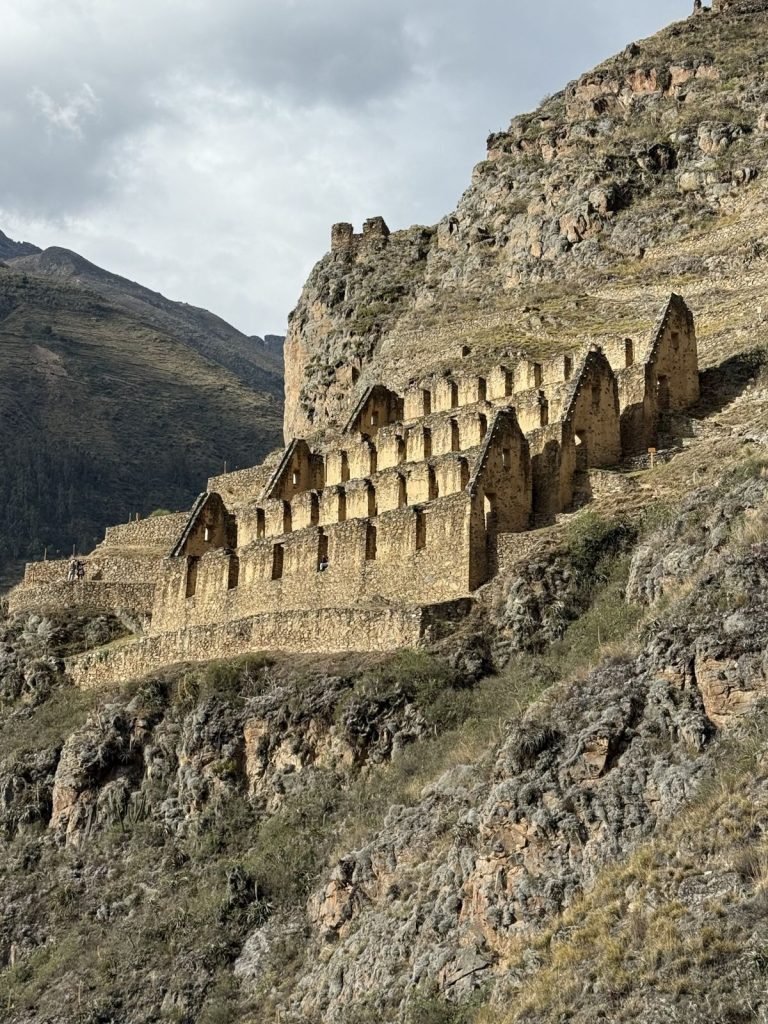
On the mountain facing the fortress, the Incas built storehouses (qollqas) where the cold wind kept food dry. The trail starts from Calle Lares, a few minutes from the square; it is free and open roughly 7:00 to 16:30. It is a steep climb on stone steps — about 1 to 1.5 hours up and down — with the best view of the town and the fortress. Stay on the marked path and bring water.
End of the day: textiles and sunset
Weaving is alive in the communities above Ollantaytambo. Visit a fair-trade shop such as Awamaki to see the work of local weavers, or browse the stalls on the way to the train station. As the sun goes down, the light on the terraces of the fortress is beautiful from the square.
Day 2: out into the Sacred Valley
With a second day, Ollantaytambo is the ideal base: you are already in the valley, so you skip the drive from Cusco. Choose the plan that suits you.
Option A: Maras and Moray (half day)

The circular Inca terraces of Moray and the thousands of salt pools of Maras, still worked by local families. It fits in a morning, so you have the afternoon free. Moray is included in the Boleto Turístico; the salt mines charge their own small entrance. Add Chinchero and its weavers to make it a full day.
Option B: Pisaq, Maras and Moray (full day)
If you want to see the whole valley in one day: Moray and Maras in the morning, then along the Urubamba river to Pisaq, whose Inca terraces and temples crown the mountain above the town and its craft market.
Option C: hike to Pumamarca or Inti Punku
- Pumamarca — an Inca outpost above the Patacancha valley, among terraces and fields. About 5 hours return on foot from town, climbing some 800 m; entrance about S/ 10, not included in the Boleto Turístico.
- Inti Punku (Sun Gate of Ollantaytambo) — a hard, full-day hike along the old Inca quarry trail to almost 3,900 m, with huge views of the valley and the snow peaks. Plan 7 to 9 hours return; only for fit, acclimatised hikers.
Option D: Machu Picchu
Ollantaytambo is where the trains to Machu Picchu leave from, so a day trip is easy from here. Read our guide to choose train times and tickets.
Tips from our family
- Start early. Sites open at 7:00 and the mornings are quieter and usually clearer.
- Take the altitude easy on your first day: walk slowly, drink water and coca tea.
- Sun and layers: the sun is strong at this altitude and it gets cold when it sets. From November to March, carry a rain jacket.
- Carry cash in soles for entrances, the salt mines, markets and small shops.
- Choose your start time. Our private tours have a flexible start, so you can sleep in or leave at dawn.
Stay with us in Ollantaytambo
Parwa & Iskay is a family-run hotel in Qosqo Ayllu, 5 minutes on foot from the main square and the fortress, with breakfast and Wi-Fi included. Tell us your dates and we will help you plan your days, tours and trains.
Sources (checked October 2026): Nick Kembel – Ollantaytambo ruins · The Only Peru Guide – Boleto Turístico · Awamaki – Hiking Pinkuylluna · Packing Up The Pieces – Pumamarca · Packing Up The Pieces – Inca Quarry Trail